

- All Articles Latest Economic Indicators
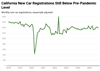
California New Car Registrations: October 2025 December 3, 2025
Registrations Dropped in October. Seasonally adjusted new car registrations declined by 2.4 percent in October. October registrations were 5 percent lower than recent peaks in December and April but slightly higher than the average level over the last couple of years.
California New Car Registrations: September 2025 November 14, 2025
Registrations Flat in September. Following three straight months of substantial growth, seasonally adjusted new car registrations grew just 0.1 percent in September. This is 3 percent lower than recent peaks in December and April but somewhat higher than the average level over the last couple of years.
California New Car Registrations: August 2025 October 7, 2025
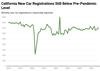
Third Straight Month of Growth. Seasonally-adjusted new car registrations grew 1.6 percent in June, 1 percent in July, and 5 percent in August, but they remain 3 percent lower than recent peaks in December and April. Sales are now somewhat higher than the average level over the last couple of years.
California New Car Registrations: July 2025 September 9, 2025
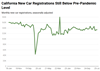
Seasonally adjusted new car registrations grew 1.5 percent in June and 1 percent in July but remain 8 percent lower than three months prior. This moderate growth stands in contrast to the substantial volatility we had observed in the prior six months. Sales remained slightly lower than the average level over the last couple of years.

California New Car Registrations: June 2025 July 29, 2025
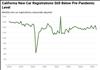
Seasonally adjusted new car registrations grew 1.5 percent from May to June. This moderate growth stands in contrast to the substantial volatility we had observed in the prior six months. Due to the sharp decline in May, however, sales remained somewhat lower than the average level over the last couple of years.
California New Car Registrations: May 2025 July 9, 2025
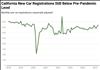
Seasonally adjusted new car registrations dropped 10 percent from April to May. As result, May’s monthly total was the lowest since June 2024.
California New Car Registrations: April 2025 June 10, 2025
Seasonally adjusted new car registrations grew 5 percent from February to March, then another 4 percent from March to April. With this strong growth, registrations reached their highest level in nearly three years. Although tariffs on imported vehicles went into effect in early April, seasonally adjusted new vehicle prices did not rise substantially.
California New Car Registrations: March 2025 May 9, 2025
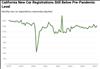
Seasonally adjusted new car registrations grew 5 percent from February to March. With this strong growth, March was the fourth highest monthly count of registrations in the last two years. As we track data for the next few months, we will see if this growth continues or if it was a transitory bump in anticipation of tariffs.
California New Car Registrations: February 2025 April 8, 2025
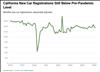
Starting with this post, we plan to publish monthly updates on new car registrations in California, which can be a useful, timely economic indicator. From December 2024 to February 2025, seasonally adjusted new car registrations declined by 8 percent. December registrations, however, had been the highest since mid-2022. As a result, February registrations still were around the average level over the last couple of years.
U.S. Retail Sales Update: October 2024 November 15, 2024
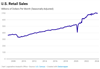
U.S. retail sales have grown 1.1 percent over the last 3 months and 2.8 percent over the last 12 months. Retail sales growth has outpaced inflation substantially over the last 3 months, but only slightly over the last 12 months.
U.S. Retail Sales Update: August 2024 September 17, 2024
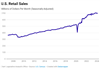
U.S. retail sales have grown 0.9 percent over the last 3 months and 2.1 percent over the last 12 months. Retail sales growth has outpaced inflation over the last 3 months, but not over the last 12 months.
U.S. Retail Sales Update: July 2024 August 16, 2024
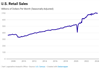
U.S. retail sales have grown 1 percent over the last 3 months and 2.7 percent over the last 12 months. Retail sales growth has outpaced inflation over the last 3 months, but not over the last 12 months.
Did California Enter a Recession Last Fall? October 3, 2023
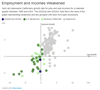
While recessions are not formally defined for state economies, economic data for the fourth quarter of 2022 and first quarter of 2023 appear consistent with California experiencing a mild recession. The apparent start of a recession in California last fall helps explain why the state faced a revenue shortfall in its most recent budget. How much the economy will continue to dampen the state's fiscal picture moving forward is unclear. However, the threat that the recent slowdown could persist will be a significant risk for the foreseeable future.