


Income Tax Withholding Tracker (September 2026) October 2, 2026
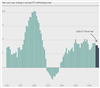
September Withholding Slightly Above Projections. Income tax withholding in September came in $270 million (3 percent) above the recent Budget Act estimate and about 6 percent higher than last year. The underlying 12-month growth trend eased slightly from 8 percent to 7 percent.
Monthly Jobs Report (August) September 18, 2026
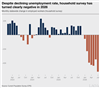
August Jobs Gain Largest Since January, But New Estimates Suggest 2026 Growth Has Been Overstated. The preliminary monthly jobs report shows the state added 39,000 payroll jobs in August, the largest monthly gain since January. At the same time, early revisions that incorporate newly filed administrative records indicate the state added far fewer jobs in January, February, and March than previously reported. The household survey also tells a concerning story: since January, the number of Californians who are working has declined by more than 270,000 and the labor force has contracted by more than 360,000 workers. The state's unemployment rate has declined in recent months but largely because workers leaving the labor force are not counted as unemployed.
California New Car Registrations: July 2026 September 9, 2026
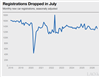
Registrations Declined in July. Seasonally adjusted new car registrations dropped 6 percent in July. Nevertheless, due to strong growth in May and June, registrations remain slightly higher than in the first few months of 2026.
Cannabis Tax Revenue Update (2026 Q2) September 2, 2026
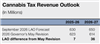
For cannabis excise tax returns filed for the second quarter of 2026, the total amount of tax due is $152 million. With this latest data, we currently project cannabis tax revenues of $630 million in 2025-26 and $650 million in 2026-27. As shown in the figure below, these estimates are close to the revenues anticipated by the 2026-27 budget package.
Inflation Tracker August 20, 2026
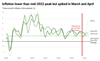
July data for the US show prices stabilizing in June and July after a period of higher inflation from March through May. Between January and May 2026, prices for US consumers grew by 2.3% (a 5.5% annual rate). This is a much higher rate than the 2.6% annual growth in prices for US consumers in 2025. Since then, overall prices have remained about the same. Recent inflation increases reflect a sharp increase in global energy prices: consumer energy prices were 23% higher in May 2026 than they were a year earlier, before falling 7% in June and July. California data tell a similar story: between December 2025 and April 2026, California consumer prices grew at a 4.5% annual rate before stabilizing in June and July. Consumers do not expect increased inflation to last: unlike in early 2025, consumer expectations about inflation in the next five years increased only moderately in early 2026.
Updated "Big Three" Revenue Outlook (August 2026) August 19, 2026
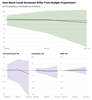
Updated Revenue Outlook in Line with Budget Act. Our updated forecast anticipates revenues from the state’s three largest taxes (income, corporation, and sales) will be similar to those assumed in the Budget Act enacted in June. We continue to caution that the stock market appears to be in the midst of a speculative bubble. The risk of a significant reversal in the market and associated state income tax collections remains high.

Understanding California Corporate Taxation: Apportionment August 11, 2026
Apportionment determines how much of a corporation’s income California can tax when the business operates across state or national borders. This post explains California’s apportionment system, including its reliance on the Single Sales Factor, and highlights a number of implications for businesses and for California’s corporate tax policy.
Understanding California Corporate Taxation: Net Operating Loss Deductions August 11, 2026
Net operating loss (NOL) deductions help promote more consistent tax treatment of businesses with similar profits but differently timed gains and losses. This post explains why NOLs exist, how repeated suspensions affect their value, how they differ from conventional business tax credits, and other considerations relevant to evaluating their use.
California New Car Registrations: June 2026 July 29, 2026
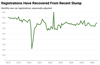
After Half-Year Slump, Strong Growth in May and June. Seasonally adjusted new car registrations dropped 8 percent from September 2025 to December 2025, then declined an additional 2 percent from December to April. Thanks to 10 percent growth from April to June, however, registrations have now fully recovered from the slump.
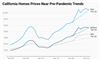
California Housing Affordability Tracker (2nd Quarter 2026) July 20, 2026
Our post provides an updated snapshot of housing affordability in California. Over the last few years, we have seen a rapid increase in California housing costs, driven by a dramatic increase in home prices and mortgage rates between 2020 and 2022. Home prices have stabilized since 2022: current prices are somewhat lower than they would have been if pre-pandemic trends had continued. Despite this, fewer California households can afford to buy a home today than before 2020.
Affordability is unlikely to improve if existing homeowners–or new builders–are unwilling to sell their homes at prices prospective buyers can afford following the rapid increase in mortgage rates in 2022. A complicating factor is that most existing homeowners are "locked-in" to mortgages with rates significantly lower than currently available. About 76 percent of California homeowners have mortgage rates under 5 percent, compared to current rates of about 6.5 percent. These homeowners face a significant additional financial cost to moving, further limiting the number of homes available for sale. This dynamic may explain why home sales remain low despite an increase in the number of homes listed for sale in 2024 and early 2025.
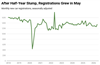
California New Car Registrations: May 2026 July 13, 2026
After Half-Year Slump, Strong Growth in May. Seasonally adjusted new car registrations dropped 8 percent from September 2025 to December 2025, then declined an additional 2 percent from December to April. In May, however, registrations grew nearly 7 percent—the strongest single month since December 2024.
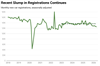
California New Car Registrations: April 2026 June 4, 2026
Slump in Registrations Continued Through April. Seasonally adjusted new car registrations dropped 8 percent from September 2025 to December 2025. After this substantial drop, registrations have not yet recovered—in fact, they declined an additional 2 percent from December to April. This slump is becoming an increasingly worrisome sign for California’s short-term economic trajectory.
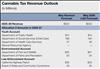
Cannabis Tax Revenue Update (2026 Q1) May 27, 2026
For cannabis excise tax returns filed for the first quarter of 2026, the total amount of tax due is $144 million. With this latest data, we currently project cannabis tax revenues of $633 million in 2025-26. This forecast is just $10 million above the administration’s May Revision forecast. Looking further ahead, our preliminary revenue projection for 2026-27 is $642 million, which is $28 million above the May Revision forecast for that year.
The 2026-27 Budget: Permanent Business Credit Limitation May 18, 2026
The May Revision proposes to permanently place a limit on the amount of business credits that can be claimed against a corporation’s tax liability. This proposal presents a reasonable option to increase corporation tax revenues and, given the state’s structural budget challenges, warrants consideration. However, we also note some tradeoffs associated with a permanent limitation and identify several issues the Legislature may wish to consider regarding both the long-run effects of the proposal and the structure of the research and development (R&D) credit going forward.
The 2026-27 Budget: Sales Tax on Prewritten Software May 16, 2026
The Governor proposes extending the state’s sales tax to sales of prewritten software broadly, no matter how the software is delivered. We see merit in the general idea of modernizing the state’s sales tax and eliminating some of the arbitrary distinctions between taxed and untaxed sales. If the Legislature wants to address these issues, we recommend that it consider extending the sales tax to a broader set of digital products, not just software. We also recommend that the Legislature consider exemptions or reduced rates for software purchased by businesses.